Changing Healthcare Technology, Changing Lives
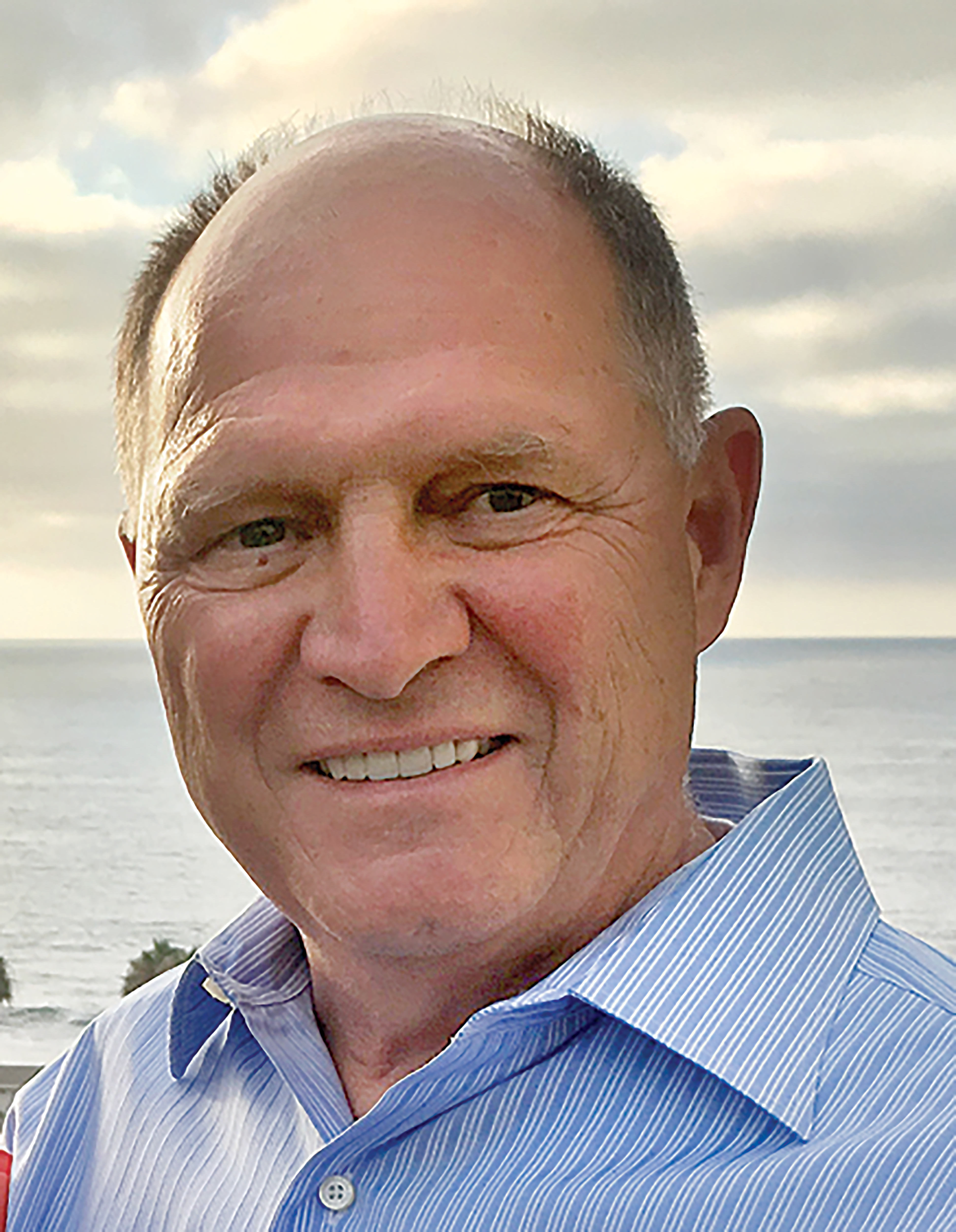
As the keynote speaker for the 2026 CMNS Undergraduate Commencement Ceremony, Andy Balo (B.S. ’70, microbiology) will share how a passion for science, innovation and impact shaped his 53-year career in healthcare technology.
Andy Balo (B.S. ’70, microbiology) isn’t a celebrity or well-known social media influencer. But for the last 20-plus years, when he traveled around the U.S. and beyond for work, total strangers made a point of stopping him in public places to shake his hand or give him a hug—and especially, to thank him for the dramatic impact he made on their lives.
“You would not believe how many times I've been at a hotel or in the airport—we traveled so much for work—and I’d be walking on a plane or off a plane, and, over and over again, someone would come up to me and hug me,” Balo explained. “And they’d tell me, ‘You changed my life. I wouldn't be alive today if it wasn't for you.’”
Those people may not have known Balo by name, but thanks to the company logo on the backpack he carried on every trip, they knew he worked for Dexcom, a healthcare startup that has been a game changer for millions of people with diabetes. For more than two decades at Dexcom, retiring in 2024 as executive vice president of clinical, global access, and medical affairs, Balo was a key player on the team that developed the first real-time, continuous glucose monitoring system—a wearable, user-friendly technology that allows diabetics to manage their condition in real time and improve their quality of life.
For Balo, every unexpected “thank you” was another reminder that he was exactly where he was supposed to be.
“It meant so much to us that all of us at Dexcom were making somebody else’s life better. And these people, they were so appreciative of that,” he said. “I call that motivation. That was our motivation to keep going.”
During his long career in healthcare technology, Balo spent more than 50 years overseeing clinical trials, product testing and regulatory filings to advance and improve medical products from heart valves to defibrillators to pacemakers. His role at Dexcom allowed him to do the one thing that mattered most—create life-changing technology from the ground up.
“I've worked in industry for over 53 years, and 30 of those years that I worked with big companies, I kept saying, ‘I really want to join a company that starts something that's going to change people's lives and make it better,’” Balo explained. “You always want to wait until you're ready and the time is right to do that, or sometimes you never actually do it at all. But you just need to take that first step, and I think I've been blessed to have that opportunity.”
When Balo first came to the University of Maryland in 1965, he never imagined how far his academic experience at UMD would take him, nor did he expect that 60 years later, he’d be launching a whole new generation of scientists on the path to their own careers. On May 20, 2026, Balo will return to the College Park campus as the keynote speaker at the College of Computer, Mathematical, and Natural Sciences’ (CMNS) Undergraduate Commencement Ceremony. And he couldn’t be more thrilled.
“It is such an honor. I can't even believe it. When they asked me, I was shocked to be honest,” Balo said. “I always wanted to do something to contribute something back to Maryland for what they gave me, so for me to be able to stand up and give the keynote speech is really wonderful. It’s going to be great.”
Building a strong foundation
Balo grew up in Pittsburgh, where he was reading science and medicine books before he even got to high school. But by the time he started college, he was still unsure if he wanted to be a doctor. He began as an engineering major, but after a few years, still fascinated by science and medicine, he switched to microbiology, delving deeper into immunology and human health.
“I had a lot of great professors. There was a microbiology professor who had been there a long time, Jack Faber, who I really respected a lot,” Balo recalled. “He really got me into thinking about diseases and human health. What really inspired me was Dr. Faber getting the class to start thinking about how we could improve people’s lives.
Looking back, Balo says UMD gave him the foundation he needed for a successful career in healthcare technology.
“Maryland gave me a broad, interdisciplinary education. I had mathematics. I had biochemistry, organic chemistry, microbiology, immunology and virology. So, what Maryland gave to me was this broad-based education that I think made me more well-rounded to go out and face the world,” he explained. “Maryland gave me a strong foundation and the background that made me a fast learner—I could really grab onto things quickly and contribute earlier.”
Soon after Balo graduated from UMD, he joined the Army. Then, a few years later, he landed a position working in cancer research at the National Institutes of Health (NIH). From there, he went on to American Hospital Supply, a company that made everything from syringes to trauma kits, before moving on to St. Jude Medical, where he worked to bring a variety of new medical devices from testing to market.
“My role was focusing on regulatory, clinical and quality for aortic valves, mitral valves, defibrillators and pacemakers,” Balo said. “I was running all the clinical trials and doing the regulatory filings. Doctors would tell us what they needed, and we'd develop the features for the device.”
From the ground up
When Balo joined Dexcom in 2002, it was a small startup on a mission to make managing diabetes easier for those living with the disease. A long process of trial and error eventually led to the company’s first continuous glucose monitoring device and, later, product improvements that made the technology accessible on everything from smartphones to Oura Rings. Balo found inspiration in every challenge.
“I felt like I was at the foundation of something, and it was something that nobody else had ever done,” he explained. “We just said, ‘Okay, this is the place I think we can have an impact.’ And we really did. When we started this company, it was just a few people in a little office. And now we're a worldwide business, in Asia, Europe, the United States and Mexico.”
Throughout the years he worked at Dexcom, Balo never forgot his connection with UMD. In 2015, he and Nicholas Simon (B.S. ’76, microbiology) and their wives teamed up to make a $1 million gift to establish the college’s first endowed life sciences chair, which received a $1 million match through the Maryland E-Nnovation Initiative Fund. The endowed chair is currently held by Distinguished University Professor of Biology Sean B. Carroll. For Balo, it was a way to pay his own success forward and support science education well into the future.
“All my kids have been in science. I've really pushed them into college, and to me, college education is absolutely critical,” Balo explained. “You grow as an individual through these relationships and through learning, and you learn more about yourself. And then hopefully when you go forward, you take that knowledge with you.”
At the 2026 CMNS Undergraduate Commencement Ceremony, Balo hopes to share lessons from his career with the next generation of scientists and remind them that how far they go from here is limited only by their own initiative and imagination.
“I can tell them that when I graduated, I was always wondering, ‘Where's all this going to take me? How do I navigate to get to what I want to do?’” Balo said. “And what I’d like for them to take away from that is they really shouldn’t think about all that too much—they should just go out and take that first step and pick something that they feel can really make a difference. For me, it took 25 years to figure that out, and I’m so glad I did.”