On the Case of the Thieving Nudibranchs
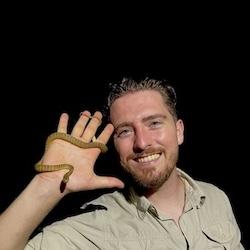
As an investigator at the American Museum of Natural History, UMD alum Jessica Goodheart (Ph.D. ’17, biological sciences) seeks to solve how sea slugs steal to survive.
When it comes to defensive strategies in nature, some sea slugs have especially sticky fingers.
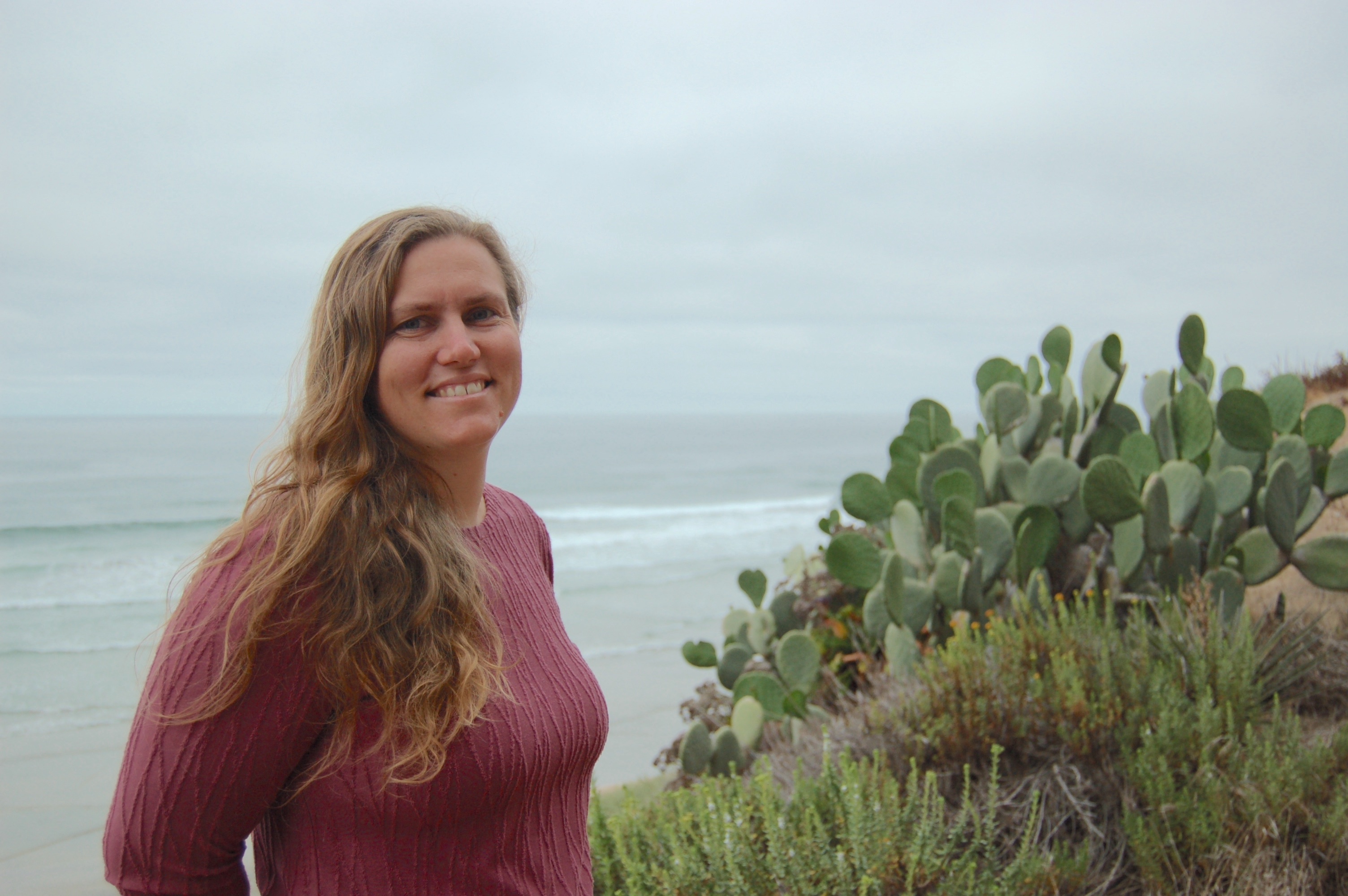
“It’s a fascinating biological phenomenon,” said alum Jessica Goodheart (Ph.D. ’17, biological sciences), the assistant curator of Mollusca and a principal investigator in the Institute for Comparative Genomics at the American Museum of Natural History in New York City. “[My research] has let me really dig into an exciting evolutionary story and the inner workings of these fun sea creatures,” she said.
In her lab, Goodheart investigates how sea slugs called nudibranchs, often wildly colorful soft-bodied mollusks lacking a protective shell, have evolved to steal venomous stinging cells from their prey and use them against their own foes.
The ability to sequester these harpoon-like stinging cells called nematocysts from anemones and other animals is unusual, according to Goodheart.
“No other defensive structures are known to be stolen or stored intracellularly, and I want to understand the molecular mechanism behind this capability,” she said.
Mixed methods
There is no one way to study the evolution of nudibranchs’ thievery.
“Being at the museum, all sorts of approaches are valued, so I incorporate field work like diving and collecting samples, anatomical and biodiversity descriptions, and collections work with more modern techniques like genome sequencing and assembly,” she explained.
As these modern tools have improved in the last decade, they’ve become more affordable and accessible.
“That we can do single-cell RNA sequencing or use CRISPR [gene editing] technology right here at the museum is pretty incredible,” she said. “Imaging, too, is much better than it used to be.”
Tapping into these new technologies, Goodheart is better able to explain the evolution and diversification of key genes that may be related to this novel stealing behavior and investigate how the nudibranchs and their prey have co-evolved this remarkable and contentious relationship.
More broadly, says Goodheart, “studying extreme survival strategies isn’t just about cataloging nature’s oddities. It’s about expanding our knowledge of what’s biologically possible. When we find a system that breaks our assumptions, it forces a rethink of basic principles.”
With the nudibranchs, such principles might include how complex traits evolve, how organisms repurpose existing tools, or how cooperation, or in this case exploitation between species emerges. Goodheart’s findings might also expose novel cellular and molecular machinery for safely handling toxins, for storage and delivery systems inside cells, and more.
From sea to UMD
Goodheart grew up on the beaches of California, poking around in tidepools and admiring sea creatures in all their weird and wonderful forms.
“I always loved marine biology, but as a young person I didn’t really understand that it could be a career,” she said.
As an undergrad she began taking courses toward a veterinary degree.
“But soon I realized I liked the basic biology classes most, where we focused on the fundamental questions of how life works,” she said. “So, I switched to biology and never looked back.”
After earning undergraduate and graduate degrees in biology at Cal Poly Pomona, Goodheart made another change, this time switching coasts.
“The biggest draw was probably UMD’s connection to the Smithsonian,” she said, “plus I was just ready to be somewhere new.”
At UMD, Goodheart joined the lab of Michael Cummings, professor of biology and director of the Center for Bioinformatics and Computational Biology, where she learned to use phylogenetics to reconstruct the evolutionary histories of organisms. She also had a mentor at the Smithsonian National Museum of Natural History, Allen Collins, who studied cnidarians—the animals from which nudibranchs steal weaponry.
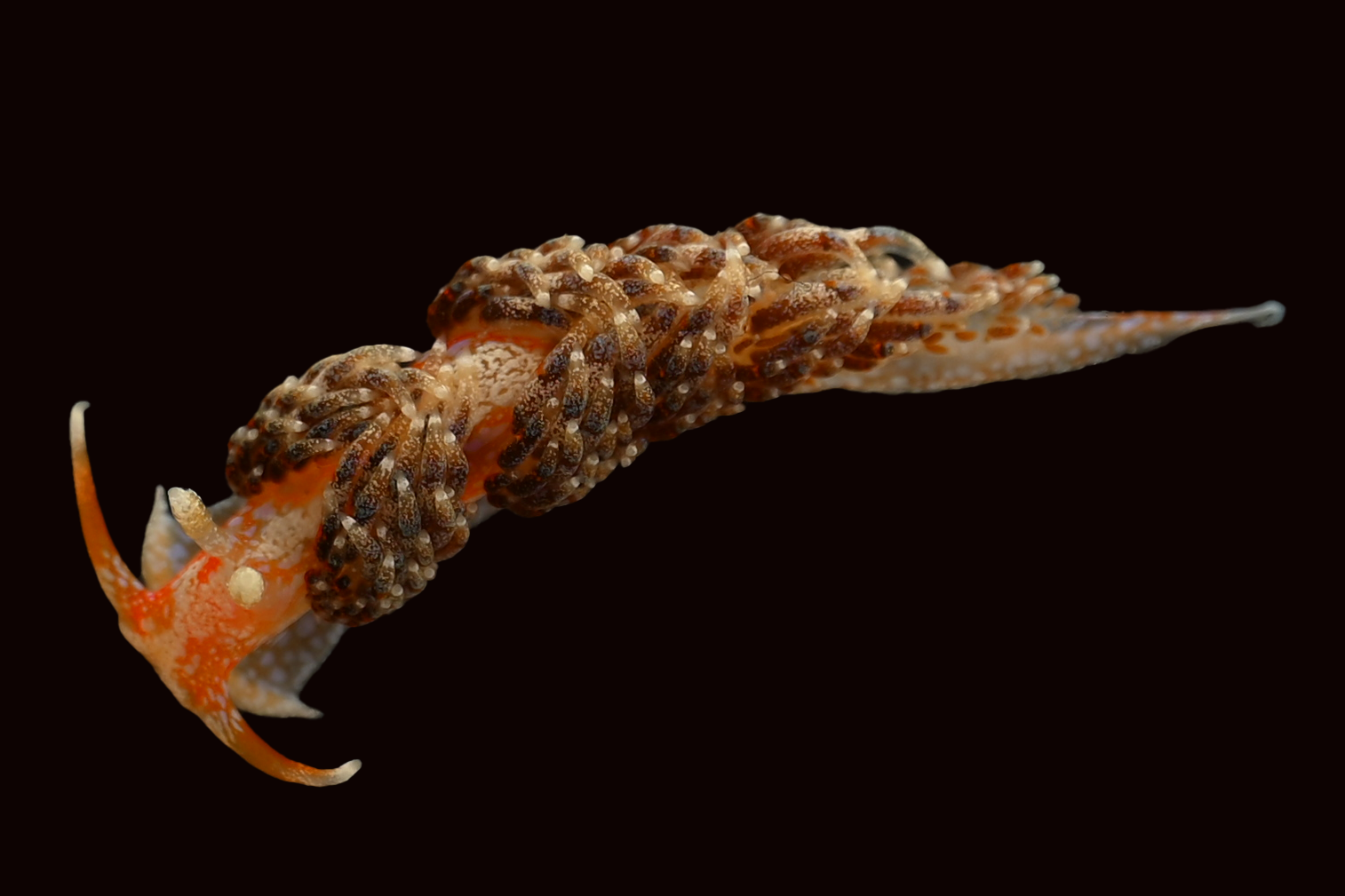
“At that point sea slugs became part of my everyday world,” Goodheart said. “When I was working in the field, I even dreamed about them.”
Between the two institutions she recalls an academically supportive atmosphere where biology and museum faculty went out of their way to encourage students in their studies, and where she learned to fully appreciate an animal not typically used as a model organism.
Outside of classes, Goodheart served as co-president of BEEST, a graduate student group focused on biology, ecology, and evolution, and to keep up her diving skills, she worked at the campus neutral buoyancy facility.
“I was mostly cleaning tanks, cleaning the pool, but it was great meeting people from different departments,” she said, “plus I got to help with some experiments as a safety diver, which was a lot of fun.”
Goodheart says her UMD experience prepared her well not just to do great science that she was excited about but also to “get over or around the walls that you face while doing a Ph.D., which gave me the thinking skills to ask questions and solve problems later on.”
The result: a successful career driven by a flamboyant mollusk and an evolutionary mystery.
“I get oversee an amazing museum collection and investigate this very cool thing at a level of detail than hasn’t been considered before,” she said. “I feel very lucky to do what I do.”