UMD Alum Julian Dumayas Fights HIV at NIH
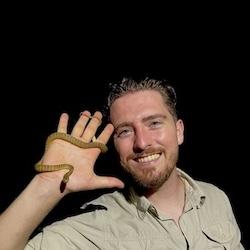
As a recipient of the prestigious Intramural Research Training Award, Julian Dumayas (B.S. '26, biological sciences) researches new approaches to eliminating HIV from patients’ DNA.
It didn’t take Julian Dumayas (B.S. '26, biological sciences) long to find his dream job.
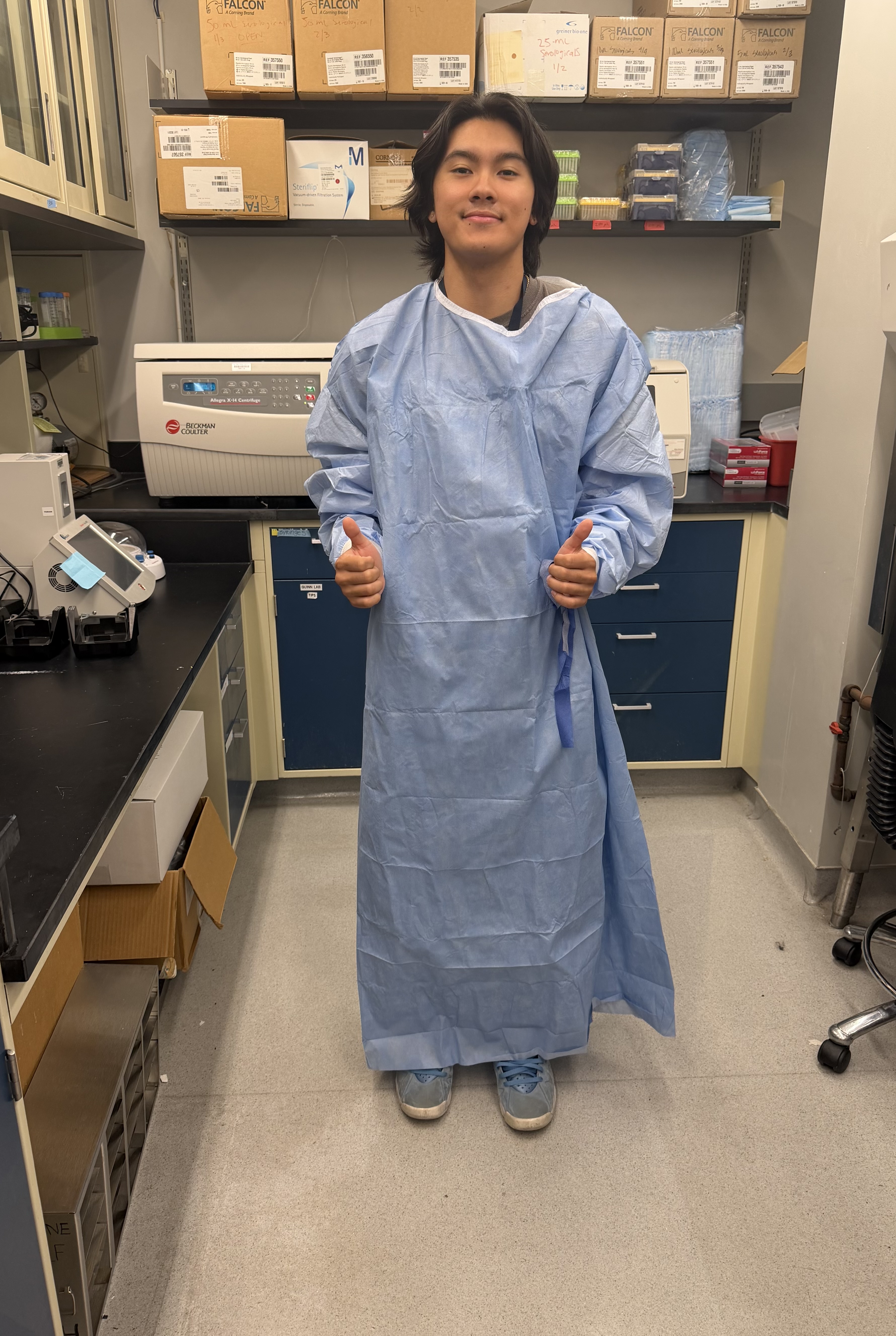
After graduating from the University of Maryland in the spring, Dumayas joined the National Institutes of Health (NIH), where he researches new ways to treat HIV. He received an Intramural Research Training Award (IRTA) fellowship to support his work. IRTA is a prestigious post-baccalaureate program that funds advanced training and practical research experiences for investigators early in their professional research careers. For Dumayas, it’s a stepping stone toward his ultimate career goal of becoming a physician-scientist—a trajectory that began at UMD, where he developed a passion for translating scientific research into medical treatment.
“The way you can help people through medical research is really fulfilling,” Dumayas said. “It’s amazing what you can do with medicine, and that has driven me forward.”
Growing up in Annapolis and Rockville, Maryland, Dumayas thought he’d become an engineer like his father. But in high school, rather than being drawn to physics and math, biology was his favorite course. So instead of following his father’s footsteps, he followed his mother—an EKG technician who once dreamed of becoming a medical doctor.
Dumayas spent two years at Montgomery College before transferring to UMD. At Maryland, he fell in love with biology research through the First-Year Innovation and Research Program (FIRE). He joined the program's fertility science research stream, working under then-faculty leader Halli Weiner (Ph.D. ’15, animal science) and Biology Professor Eric Haag to study how sperm respond to different compounds, including enzymes and antibiotics. The work has applications in assisted reproduction technologies for agriculture, animal conservation and human fertility.
"There's little data on whether different fertility strategies work," Dumayas said. "We wanted to create a catalog of all these different enzymes and medications to see if they increase or decrease sperm viability.”
As a transfer student—and especially as an upperclassman studying alongside freshmen in the FIRE program—Dumayas was nervous about making friends. But he quickly found that people at UMD welcomed him with open arms.
"The community of Maryland is really inclusive," he said. "You'll have your group to struggle with and to laugh with."
As Dumayas continued studying biological sciences at Maryland, he became more interested in immunology. That fascination led him to his two-year post-baccalaureate fellowship at the NIH’s National Institute of Allergy and Infectious Diseases, where he works with International HIV/STD Chief Steven Reynolds and staff scientist Andrew Redd.
Now, Dumayas spends his days at the lab bench researching ways to treat HIV. The issue his work addresses is that once HIV infects a cell, it inserts its genetic material into the patient’s genome, where it hides and produces more virus indefinitely. That’s why HIV is currently incurable: Existing therapies suppress the virus, but they don’t cut out the viral DNA that is already embedded in a person’s chromosomes. Dumayas's research aims to find novel methods to remove the foreign genetic material to cure HIV.
Looking ahead, Dumayas hopes to spend his career conducting this sort of cutting-edge biomedical research and translating it into clinical practice. After his IRTA fellowship, he plans to enroll in an MD or M.D.-Ph.D. program and study cancer. He’s getting closer to achieving his goal of becoming a physician-scientist every day—and he credits UMD for empowering him to expand his horizons.
"My experience at Maryland allowed me to grow and was so rewarding,” Dumayas said. “I loved absolutely every second of it.”