Listening to What the Fish Say About Hearing Loss
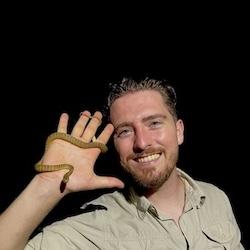
A side project on salmon ears led Allison Coffin (Ph.D. '05, biological sciences) to a biomedical sciences career she never expected.
For Allison Coffin (Ph.D. ’05, biological sciences), a love for biology started with a shark.
“Seeing a shark in the wild when I was about six, I thought, ‘That’s so cool, I want to know about that,’” said Coffin, now an associate professor of biomedical sciences at Creighton University in Nebraska. “Some kids love dinosaurs. For me, it was sharks, with their weird eyes and all those teeth.”
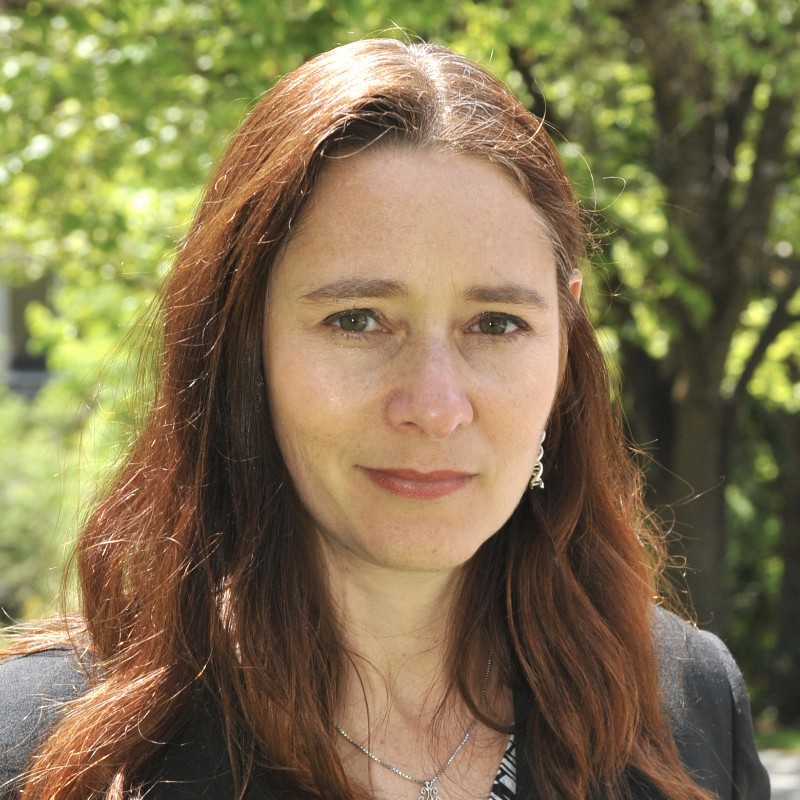
Coffin’s fascination with the big fish held: She got her bachelor’s degree in marine biology from the Florida Institute of Technology, where her senior project on fish communication solidified her plans to continue in the field. While earning her master’s degree in fisheries at the University of Minnesota, she learned about University of Maryland Biology Professor Emeritus Arthur N. Popper’s research on fish hearing and auditory mechanisms.
“I wrote to him and asked, ‘Can I please come do a Ph.D. with you?’ And he basically said yes,” she recalled. “Then, when I walked into his office for my interview, Art said, ‘When do you want to start?’ And that was that.”
The otolith effect
Coffin was one of the first Ph.D. students supported by UMD’s Center for Comparative and Evolutionary Biology of Hearing, an interdisciplinary program funded by a training grant from the National Institutes of Health’s National Institute on Deafness and Other Communication Disorders.
Coffin’s dissertation focused on how different proteins are distributed in the ears of various vertebrates, which allowed her to build fundamental skills she’s been using ever since—from protocol troubleshooting to fluorescence microscopy. But it was a side project on salmon ears that had the biggest impact on her career trajectory.
As Coffin explained, fish have small calcium carbonate masses in their ears called otoliths, which overlie the sensory tissue and stimulate the hearing cells, allowing fish to hear. (You can also count the rings in otoliths, like rings in a tree, to determine a fish’s age almost to the number of days.)
These otoliths are normally white and opaque. But when some graduate students from the University of California, Santa Cruz, and the Alaska Department of Fish and Game working on salmon reached out to Popper with some translucent, bumpy otoliths, the question arose: Does this abnormality affect the animals’ hearing? Coffin’s interest was piqued.
Transferring the fish to Maryland, she dove into the project, testing the salmon’s hearing and examining key ear structures in detail.
“It got to the point where we could predict quite well what the otoliths would look like based on a fish’s hearing ability,” she said. “This was the rare case in science of quickly going from question to answer. Do these weird ear stones affect a fish’s hearing? Oh my gosh, yes!”
It was a turning point for her: “The project that made me love research,” she said.
After Coffin graduated from Maryland, Popper connected her with a faculty member at the University of Washington who was studying zebrafish as a model for human hearing loss—and this postdoctoral fellowship led her transition into biomedical sciences research.
“Fish ears are quite similar to mammalian ears in some very fundamental ways,” Coffin said. “They respond similarly to medications that we know cause hearing loss, they respond similarly to noise, and my lab and a few others showed recently that zebrafish also lose their hearing as they age.”
Unlike in humans, hearing cells in fish regenerate. So why would the animal’s hearing decline with time if worn-out parts are regularly replenished?
“It turns out it’s the rate of replacement that slows with age,” she said. “So, now I want to know: What genetics underlie this slowdown and how we can apply what we learn to human hearing? And can zebrafish teach us how to advance therapies to prevent hearing loss or restore it after damage? These are some of the questions driving my lab at Creighton today.”
‘Superlative communicator’
As a faculty member, Coffin prioritizes research, teaching and communication.
“Allison was a delight to have in the lab, not just for her scholarly skills, which were sizable, but because she was already a superlative communicator,” Popper said. “As a graduate student, she had the ability to teach others how to communicate effectively. She has helped many younger researchers rise to their potential. It’s one of her immense strengths.”
Coffin’s commitment to excellence in communication started in Minnesota, when she joined her mother at a meeting of Toastmasters International, a nonprofit educational organization focused on promoting public speaking skills. She stuck with it after moving to Maryland, ultimately becoming president of the Rockville club and a sought-after communications trainer for other scientists. In 2017, she helped launch Science Talk Northwest, a conference that led to the formation of the nonprofit Association of Science Communicators (ASC).
“For me, being a good science communicator is part of being a good scientist,” said Coffin, who currently serves as ASC's president.
Some 20 years after graduating, Coffin continues to value the many academic, research and collaboration opportunities UMD offered.
“I would advise today’s science students to really explore those, as you might end up going in a different direction than you expected. Which, as I learned, can be the best possible thing,” she said.