Timothy Maugel Celebrates 55 Years in Biology
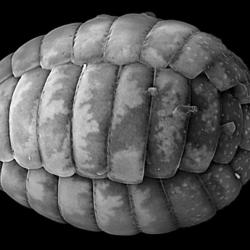
Timothy Maugel has been working at the University of Maryland for 55 years. He directs the Laboratory for Biological Ultrastructure, an imaging facility that contains transmission, scanning, light and confocal microscopes. Maugel shared his experiences and insights in this role.
This interview has been edited for length and clarity.
How and when did you end up at the University of Maryland?
After graduating from Penn State with a B.A. specializing in field zoology, I thought it prudent to gain experience in laboratory science. Not only was that critical to continuing one of my favorite subjects, biology, but at the time, the late 1960s, it was more likely to be a field where the jobs were. That led to my first real job in science, a stint at two hospitals in southern Pennsylvania as a research technician on a Leukemia Research team. Our work was initially funded by NIH grants. Of course, funding in those days was often interrupted by external government actions, in our case, the Vietnam conflict, and could be very unreliable. After five years of this job instability and an acquired skill as an electron microscopist, I accepted a position in the then Department of Zoology at the University of Maryland.
What is your favorite thing about working in the Department of Biology?
Over the years, my job position has been listed in the Department of Zoology, then the College of Life Sciences, and finally in the Department of Biology, so I would rather classify myself as a life scientist with a specialty in biological electron microscopy. As such, the access to life forms those entities gave/gives me is foremost the favorite thing about working here. Then, of course, there are the people, the faculty members, the graduate and undergraduate students who bring their interests in specific organisms or entities to me to help solve their problems.
Did you always think you’d work in academia?
No, never had that thought. My job philosophy: “What happens, happens.”
What are your key responsibilities in your role?
- Manage the operation and activities of the Laboratory for Biological Ultrastructure
- Train and/or assist those with interests in biological electron microscopy
What does your day-to-day look like in your job?
- If there are problems with any equipment, troubleshoot problems, attempt a repair, if not successful, request assistance from the service company.
- Prepare specimens for observation in electron microscopical equipment.
- Assist with the operation of equipment if needed.
- Complete any required paperwork that is involved with usage fees, etc.
What do you like most about your job?
Of course, the electron microscopy. The revelation of “things” never before seen or realized.
What motivates you to do your job well?
Partly because of my familiar training. The “Do things well, or don’t do it at all” philosophy. Partly because of my electron microscopy training where an attempt is always made to preserve the life-like state in samples. To do so, one must select precise measures to ensure that artifactual changes are minimized.
What do you like to do outside work?
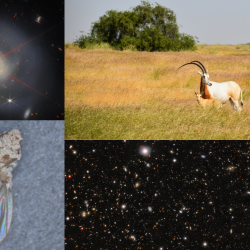
In the past: gardening, running (now too old). Currently: nature photography, birding